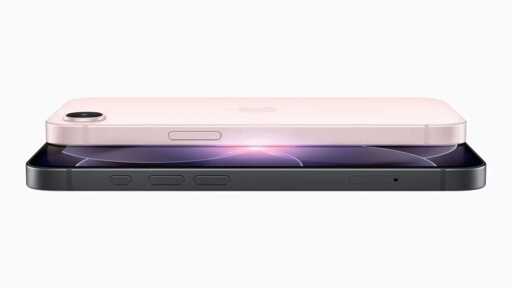
The new iPhone 17 model supports Apple’s AI tools, features faster wireless charging, and includes the new C1X modem developed by the company’s silicon team.
I mean, if your goal is to make people as safe from the police as possible as simply as possible then the cellebrite and graphite leaks would steer you towards the last few generations of pixels and any iphone that can get the latest os.
That’s not to say graphene isn’t a fantastic choice, I use it daily and it’s secure from law enforcement hardware, just that the leaked capability matrixes consistently indicate that cops can’t break into appropriately secured iphones and specific android phones as well.
Which is really useful knowledge to have and build your behaviors around that would be completely missed if someone were to base their choice of device around what doesn’t have Israeli connections first.
I mean if you base your choice of device around what doesn’t have Israeli connections first that means you’re not getting a phone built on the US/Israeli supply chain, and these do tend to be more secure. There’s a reason Huawei is banned in the US, and the US has been lobbying all the vassals to stop using Huawei gear. It’s not because they’re afraid of Chinese surveillance, but rather because Huawei doesn’t have American backdoors.
From cellebrite’s own documentation (on the first page, of a sales pdf, which was the second or third google result):
Supported devices include Huawei H1611, Xiaomi Mi 5, ZTE Z832 Sonata 3 and ZTE Z981 ZMax Pro
I’m, again, not as familiar with huawei and xiaomi product lines and whatnot as I am with the iphones and pixels so I can’t speak to the popularity of specific ones implicated in just that bullet point and the doc I quoted from is at least seven years old, however I do know that many more chinese devices are accessible with these cop metasploit tools.
The idea that backdoors can be grouped by what nation state intelligence apparatus has control over the manufacturing of the device in question is good reasoning when we have no other information to go off of. In this case though, there is a wealth of information public, leaked and from people who just can’t help but warthunder their classified documents in fights online.
I would never suggest American/israeli tech power should be accepted as a net positive or reasonable compromise. What I want is for people to critically and carefully consider the devices they trust based on what we know about intelligence apparatuses ability to compromise them as opposed to the fog of information war.
These are phones literally from a decade ago. Huawei H1611, Xiaomi Mi 5, and ZTE Z832 Sonata 3 were all released in 2016. This is not a serious argument.
The idea that you want to avoid devices from known bad actors shouldn’t be controversial in any way. Devices developed using an independent tech stack will always be inherently safer.
Apologies for the late reply, sometimes I’m not in a good spot to chase down leaks about cop shit.
As of at least 2021 cellebrite claims they have the ability to access xiaomi and huawei devices, listing explicitly the soc and baseband chips used by the very phones you are claiming are safe because of their lack of amerisraieli death pact ties.
A famous leak of their support matrix from 2024 confirms this and also explicitly groups android devices by their soc/baseband chips. Reenforcing that the chips ostensibly with no ties to the amerisraeli death cult are not any more secure or private than ones with those ties.
The point of those is to quickly draw a line that connects the past to the present. We see the same claims, then the affirmation of those claims reported by a third party.
I think in a vacuum, assuming perfectly spherical semiconductor manufacturing industries and leaving software out of the picture, the point you’re trying to make is the most materialist take: you can’t trust the imperialists tech, the masters tools cannot be used to tear down the plantation, etc.
In our present day with a hundred years plus of semiconductor manufacturing history encompassing real countries whose attitudes towards one another and development have changed significantly during that span, given reliable information about the explicit capacities western (and lest be serious here, any) le or intelligence apparatus has, the most materialist take is that there’s more to the choice of what device to trust than where the chips come from.
To butcher a car metaphor, what you’re saying is similar to people claiming buying and driving a Tesla is better than a BYD because you can’t trust Chinese tech. That idea might be fine (or chauvinist) in a bubble but when we can evaluate the Tesla and BYD for ourselves in a parking lot or on the road we might come away with wildly different ideas.
Technology has to be evaluated based on its capabilities and how it’s being used when that’s possible and I would argue it’s extremely possible in the case of security in phones and that if you think you’re gonna be scooped by the cops you need to be on graphene, the latest ios or maybe a pixel with the latest android.
So that’s still from half a decade ago. Again, it’s not impossible that US and Israel could find vulnerabilities in devices built on an independent stack, but at least it’s not part of the design there. And that means these vulnerabilities get fixed over time. Your support matrix from 2024 does not show a single Chinese made device which proves my point. It’s US based tech stacks that are compromised.
The point I’m making is this. One tech stack might have vulnerabilities due to negligence and human error, the other has backdoors baked in by design.
Just because something is a SoC or not is not really relevant. That’s just a type of architecture. What matters is if the specific implementation is compromised or not. I’m not aware of any evidence that recent Chinese devices are compromised. However, your own link shows that iphones are.
You’re right that chips alone aren’t the deciding factor, but they are the core of the stack, and if your hardware is compromised then it really doesn’t matter what your software is doing at that point.
While there might be a case for graphene being the most secure software stack, the hardware could still betray you and there’s little graphene could do about that. Meanwhile, there is zero evidence for the claim that latest ios or maybe a pixel with the latest android are preferable to HarmonyOS or HyperOS. If anything, you yourself just showed that iOS should not be trusted.
The point of using the company claims from 2021 and the famous leak from 2024 was to establish a pattern, not to suggest that information from that long ago could be applied directly to this present moment.
The pattern is: android devices and old iphones and pixels that need to be updated are vulnerable no matter the country and alliances.
It can be established because the company’s claims forever were “we can do this” and finally there was a leak showing in pretty good detail that they weren’t lying.
Page 3: supported extraction listed for android devices by chipset includes huaweis ostensibly non amerisraeli hardware stack. Secured container extraction supported for both huawei and xiaomi implementations present in harmonyos and hyperos.
Page 4: huawei and xiaomi devices listed as brute force able in both on and off device states (there are notably some exceptions here, some qualcomm chipsets take a day and the p40 phones with their software updates weren’t brute forceable).
Page 5: huawei and xiaomi, realme, oppo, oneplus and zte are listed as brute forceable in off and on states.
here’s the same thing but for ios. I’m tired and it gives much more precise detail on a narrower range of devices, so I’ll just summarize:
Six year old iphones running a month old os version were safe from even “after first unlock” (the most unsafe locked state) compromise.
some phones running the one and a half year old ios in a “before first unlock” state (the most secure locked state) were subject to a brute forcer that was limited to 5000 attempts per day. That sounds like a lot, but a six digit pin would need constant hammering for 200 straight days. Not unheard of but a very far cry from the “plug it up, get access” that is advertised, documented in many security outlets and something I have literally observed happening inside a cop car at a protest.
So to summarize: as of two years ago, the ostensibly non amerisraeli tech stack was not secure against the cops. Harmonyos and hyperos were not secure against the cops. Out of date ios and pixel phones were also not secure.
I want to make clear that what is explicitly shown with regard to pixels and iphones is definitley true of all device families: the newest stuff has fewer vulnerabilities because people just haven’t been pounding on it as much.
Again, this is intended to help people to make good choices using real world information as opposed to predictions. If I were buying a phone to resist the cops, it would be an iphone or a pixel with graphene.
The pattern is: android devices and old iphones and pixels that need to be updated are vulnerable no matter the country and alliances.
Ok, but what does this have to do with the discussion we’re having here. I never said anything to suggest using old phones and operating systems. I repeatedly said I’m talking about new devices here.
Again, while there could be an argument for a pixel with graphene, it happens to be what I’m currently using because I can’t get a Huawei device in Canada, there is zero evidence that stock pixel or iphone are preferable to LATEST Huawei or Xiaomi for people who have the choice.
So we don’t have access to the most up to date information on the most recent iteration of cop hardware and software for breaking into phones.
If either one of us did, it would be a very bad idea to say that we were basing our argumentation on that.
Based instead on historical data points, like the ones I’ve provided, we can consistently see that at those points in time the latest stock pixel and iphone devices were preferable to anything else including the latest huawei and xiaomi devices for the purposes of avoiding cop access.
The reason I’ve been engaging with your argument that the latest xiaomi/huawei stuff is preferable to the pixel/iphone equivalent is that I’m concerned someone worried about cops might make a decision about how to use their limited resources based on that argument.
They’re not bad phones or bad companies and China isn’t a bad country. There’s just real world evidence that the devices aren’t as secure as some alternatives.
My whole point separate of yours (that I’m paraphrasing here, apologies) that devices made outside the amerisraeli apparatus are inherently safer is that we need to pay attention to the wealth of information about phone security rather than base our decisions on assumptions.


I mean, if your goal is to make people as safe from the police as possible as simply as possible then the cellebrite and graphite leaks would steer you towards the last few generations of pixels and any iphone that can get the latest os.
That’s not to say graphene isn’t a fantastic choice, I use it daily and it’s secure from law enforcement hardware, just that the leaked capability matrixes consistently indicate that cops can’t break into appropriately secured iphones and specific android phones as well.
Which is really useful knowledge to have and build your behaviors around that would be completely missed if someone were to base their choice of device around what doesn’t have Israeli connections first.
I mean if you base your choice of device around what doesn’t have Israeli connections first that means you’re not getting a phone built on the US/Israeli supply chain, and these do tend to be more secure. There’s a reason Huawei is banned in the US, and the US has been lobbying all the vassals to stop using Huawei gear. It’s not because they’re afraid of Chinese surveillance, but rather because Huawei doesn’t have American backdoors.
From cellebrite’s own documentation (on the first page, of a sales pdf, which was the second or third google result):
I’m, again, not as familiar with huawei and xiaomi product lines and whatnot as I am with the iphones and pixels so I can’t speak to the popularity of specific ones implicated in just that bullet point and the doc I quoted from is at least seven years old, however I do know that many more chinese devices are accessible with these cop metasploit tools.
The idea that backdoors can be grouped by what nation state intelligence apparatus has control over the manufacturing of the device in question is good reasoning when we have no other information to go off of. In this case though, there is a wealth of information public, leaked and from people who just can’t help but warthunder their classified documents in fights online.
I would never suggest American/israeli tech power should be accepted as a net positive or reasonable compromise. What I want is for people to critically and carefully consider the devices they trust based on what we know about intelligence apparatuses ability to compromise them as opposed to the fog of information war.
These are phones literally from a decade ago. Huawei H1611, Xiaomi Mi 5, and ZTE Z832 Sonata 3 were all released in 2016. This is not a serious argument.
The idea that you want to avoid devices from known bad actors shouldn’t be controversial in any way. Devices developed using an independent tech stack will always be inherently safer.
Apologies for the late reply, sometimes I’m not in a good spot to chase down leaks about cop shit.
As of at least 2021 cellebrite claims they have the ability to access xiaomi and huawei devices, listing explicitly the soc and baseband chips used by the very phones you are claiming are safe because of their lack of amerisraieli death pact ties.
A famous leak of their support matrix from 2024 confirms this and also explicitly groups android devices by their soc/baseband chips. Reenforcing that the chips ostensibly with no ties to the amerisraeli death cult are not any more secure or private than ones with those ties.
The point of those is to quickly draw a line that connects the past to the present. We see the same claims, then the affirmation of those claims reported by a third party.
I think in a vacuum, assuming perfectly spherical semiconductor manufacturing industries and leaving software out of the picture, the point you’re trying to make is the most materialist take: you can’t trust the imperialists tech, the masters tools cannot be used to tear down the plantation, etc.
In our present day with a hundred years plus of semiconductor manufacturing history encompassing real countries whose attitudes towards one another and development have changed significantly during that span, given reliable information about the explicit capacities western (and lest be serious here, any) le or intelligence apparatus has, the most materialist take is that there’s more to the choice of what device to trust than where the chips come from.
To butcher a car metaphor, what you’re saying is similar to people claiming buying and driving a Tesla is better than a BYD because you can’t trust Chinese tech. That idea might be fine (or chauvinist) in a bubble but when we can evaluate the Tesla and BYD for ourselves in a parking lot or on the road we might come away with wildly different ideas.
Technology has to be evaluated based on its capabilities and how it’s being used when that’s possible and I would argue it’s extremely possible in the case of security in phones and that if you think you’re gonna be scooped by the cops you need to be on graphene, the latest ios or maybe a pixel with the latest android.
So that’s still from half a decade ago. Again, it’s not impossible that US and Israel could find vulnerabilities in devices built on an independent stack, but at least it’s not part of the design there. And that means these vulnerabilities get fixed over time. Your support matrix from 2024 does not show a single Chinese made device which proves my point. It’s US based tech stacks that are compromised.
The point I’m making is this. One tech stack might have vulnerabilities due to negligence and human error, the other has backdoors baked in by design.
Just because something is a SoC or not is not really relevant. That’s just a type of architecture. What matters is if the specific implementation is compromised or not. I’m not aware of any evidence that recent Chinese devices are compromised. However, your own link shows that iphones are.
You’re right that chips alone aren’t the deciding factor, but they are the core of the stack, and if your hardware is compromised then it really doesn’t matter what your software is doing at that point.
While there might be a case for graphene being the most secure software stack, the hardware could still betray you and there’s little graphene could do about that. Meanwhile, there is zero evidence for the claim that latest ios or maybe a pixel with the latest android are preferable to HarmonyOS or HyperOS. If anything, you yourself just showed that iOS should not be trusted.
The point of using the company claims from 2021 and the famous leak from 2024 was to establish a pattern, not to suggest that information from that long ago could be applied directly to this present moment.
The pattern is: android devices and old iphones and pixels that need to be updated are vulnerable no matter the country and alliances.
It can be established because the company’s claims forever were “we can do this” and finally there was a leak showing in pretty good detail that they weren’t lying.
here is the entire pdf of the leaked android support matrix linked in the article I linked to above. It only goes model by model for pixels, partly because it’s illustrating their capabilities against graphene as opposed to stock android but likely also because there’s thousands of android phones and a model/os version matrix would be insane and have an endnotes page a mile long.
Page 3: supported extraction listed for android devices by chipset includes huaweis ostensibly non amerisraeli hardware stack. Secured container extraction supported for both huawei and xiaomi implementations present in harmonyos and hyperos.
Page 4: huawei and xiaomi devices listed as brute force able in both on and off device states (there are notably some exceptions here, some qualcomm chipsets take a day and the p40 phones with their software updates weren’t brute forceable).
Page 5: huawei and xiaomi, realme, oppo, oneplus and zte are listed as brute forceable in off and on states.
here’s the same thing but for ios. I’m tired and it gives much more precise detail on a narrower range of devices, so I’ll just summarize:
Six year old iphones running a month old os version were safe from even “after first unlock” (the most unsafe locked state) compromise.
some phones running the one and a half year old ios in a “before first unlock” state (the most secure locked state) were subject to a brute forcer that was limited to 5000 attempts per day. That sounds like a lot, but a six digit pin would need constant hammering for 200 straight days. Not unheard of but a very far cry from the “plug it up, get access” that is advertised, documented in many security outlets and something I have literally observed happening inside a cop car at a protest.
So to summarize: as of two years ago, the ostensibly non amerisraeli tech stack was not secure against the cops. Harmonyos and hyperos were not secure against the cops. Out of date ios and pixel phones were also not secure.
I want to make clear that what is explicitly shown with regard to pixels and iphones is definitley true of all device families: the newest stuff has fewer vulnerabilities because people just haven’t been pounding on it as much.
Again, this is intended to help people to make good choices using real world information as opposed to predictions. If I were buying a phone to resist the cops, it would be an iphone or a pixel with graphene.
Ok, but what does this have to do with the discussion we’re having here. I never said anything to suggest using old phones and operating systems. I repeatedly said I’m talking about new devices here.
Again, while there could be an argument for a pixel with graphene, it happens to be what I’m currently using because I can’t get a Huawei device in Canada, there is zero evidence that stock pixel or iphone are preferable to LATEST Huawei or Xiaomi for people who have the choice.
So we don’t have access to the most up to date information on the most recent iteration of cop hardware and software for breaking into phones.
If either one of us did, it would be a very bad idea to say that we were basing our argumentation on that.
Based instead on historical data points, like the ones I’ve provided, we can consistently see that at those points in time the latest stock pixel and iphone devices were preferable to anything else including the latest huawei and xiaomi devices for the purposes of avoiding cop access.
The reason I’ve been engaging with your argument that the latest xiaomi/huawei stuff is preferable to the pixel/iphone equivalent is that I’m concerned someone worried about cops might make a decision about how to use their limited resources based on that argument.
They’re not bad phones or bad companies and China isn’t a bad country. There’s just real world evidence that the devices aren’t as secure as some alternatives.
My whole point separate of yours (that I’m paraphrasing here, apologies) that devices made outside the amerisraeli apparatus are inherently safer is that we need to pay attention to the wealth of information about phone security rather than base our decisions on assumptions.
Heres yet another data point to go by, in this case presented as a blog analysis of the 2025 leak (only a little over a year old at this point!). there’s a million great bits of knowledge in that page if you’re interested in learning a ton about android security but the long and short of it for android devices is about the same as before: graphene is at the top, then stock pixel then literally everything else.