

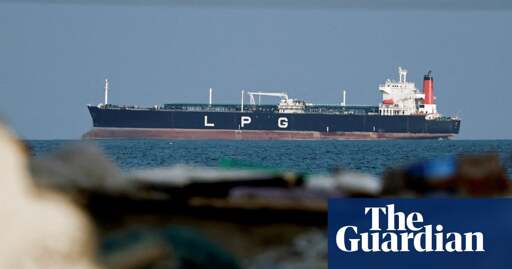
UK and Japan among countries that are considering options but yet to commit warships to blockaded shipping route
Countries including the UK, Japan, China and South Korea have said they are still considering their options but without making commitments after the US president, Donald Trump, urged them to send warships to the strait of Hormuz to secure the vital shipping route.
The effective closure of the strait of Hormuz by Tehran, in retaliation for airstrikes by the US and Israel, has proved catastrophic for global energy and trade flows, causing the largest oil supply disruption in history and soaring global oil prices.
However, the international response to Trump’s call for the dispatch of warships has so far proved vague and reluctant, with countries unwilling to commit to a military response that could prove treacherous for their navies.
Fossil fuels are mainly used here as a carbon source. Plants contain carbon captured from atmospheric CO₂.
Convert biomass into platform chemicals
Bio-polyethylene
PLA plastics
Create synthetic hydrocarbons Using hydrogen + captured CO₂:
produce methanol
convert to olefins
Most pharmaceuticals rely on organic chemistry
The key fertilizer is ammonia so use green hydrogen produced by electrolysis.
Synthetic jet fuel (Power-to-Liquid) or Biofuels (SAF)
Ammonia fuel
Methanol fuel
Hydrogen fuel cells
Wind-assisted propulsion
Use hydrogen reduction of iron ore:
electric kilns
hydrogen heat
carbon capture
None of these technologies violate physics or chemistry. The challenge is cost, scale, and infrastructure, not feasibility.
If oil is at $200/barrel then these alternatives become much more attractive