

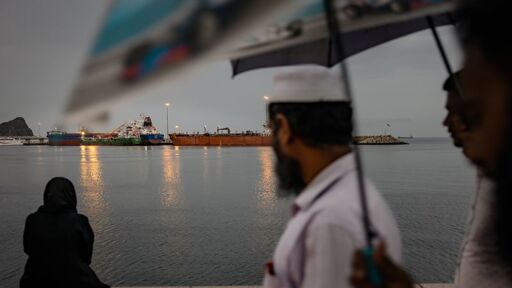
When an Iranian official this week laid out a list of demands to end the war started by the United States and Israel, he added an item that hadn’t been on Tehran’s list before: recognition of Iran’s sovereignty over the Strait of Hormuz.
The narrow waterway through which a fifth of the world’s oil and liquefied natural gas (LNG) ordinarily passes has emerged as the Islamic Republic’s most potent weapon. And it is now seeking to turn into both a source of potentially billions of dollars in annual revenue and a pressure point on the global economy.
Iran has long threatened to close the strait in case of an attack, but few expected it to follow through – or for it to prove so effective in disrupting global trade flows. The scale of the impact appears to have expanded Tehran’s ambitions, with the new demands suggesting it is seeking to turn that leverage into something more durable.
Iran is on one side of the strait, Oman is on the other. Giving Iran sovereignty would mean taking away sovereignty from Oman. Countries are supposed to be able to control their own coastlines and territorial waters.
The strait is narrow enough that there is no buffer of international waters in the middle at its narrowest. Giving one country sovereignty of the whole strait would mean violating the the sovereignty of another. Not a fair proposition.
Is that how sovereignty works? I think that’s using “sovereignty” in a more anarchistic sense. Sovereignty can be shared?
How can sovereignity be shared?
It can’t, I thought. I was asking like, “Sovereignty can be shared?” Not like “Sovereignty can be shared?!”