First of all, all cars that you’re actually going to drive on the road have two hydraulic brake systems that are almost entirely in parallel. Go look at the master cylinder in your car, there are two lines coming out of the side of it. The way that works is a floating piston; the brake pedal pushes on a piston that applies hydraulic pressure to the first line, and to a piston that floats in the master cylinder which applies pressure to the second line. If either hydraulic system were to fail, that floating piston will bottom out on that side and allow pressure to still be applied to the remaining hydraulic circuit.
If the rear one fails, the floating piston will physically touch the piston attached to the pedal, and be pushed directly. If the forward one fails, it’ll bottom out against the free end of the master cylinder and allow the other to continue working.
Most systems connect one front wheel and one back wheel to each circuit, often in opposite corners of the vehicle. You can lose one line and still have at least partial braking force.
My car has a valve where you might lose some wheels but not all with a line failure. It’s better than nothing. The parking/emergency brake is a manual cable. Don’t know how that is implemented in this new system either.
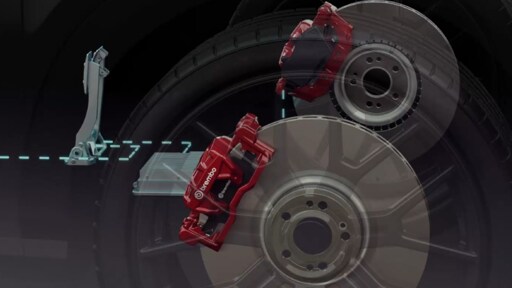
Most vehicles have some form of dual braking system as a fail safe. Random internet image…


Right now there’s also not any failsafes for the break lines failing
Yes there are.
First of all, all cars that you’re actually going to drive on the road have two hydraulic brake systems that are almost entirely in parallel. Go look at the master cylinder in your car, there are two lines coming out of the side of it. The way that works is a floating piston; the brake pedal pushes on a piston that applies hydraulic pressure to the first line, and to a piston that floats in the master cylinder which applies pressure to the second line. If either hydraulic system were to fail, that floating piston will bottom out on that side and allow pressure to still be applied to the remaining hydraulic circuit.
If the rear one fails, the floating piston will physically touch the piston attached to the pedal, and be pushed directly. If the forward one fails, it’ll bottom out against the free end of the master cylinder and allow the other to continue working.
Most systems connect one front wheel and one back wheel to each circuit, often in opposite corners of the vehicle. You can lose one line and still have at least partial braking force.
My car has a valve where you might lose some wheels but not all with a line failure. It’s better than nothing. The parking/emergency brake is a manual cable. Don’t know how that is implemented in this new system either.
Most vehicles have some form of dual braking system as a fail safe. Random internet image…
Umm have you heard of honking?
I’ll remember that if my brakes ever completely fail at speed and I’m about to Tbone a wall
That slows down your car?