

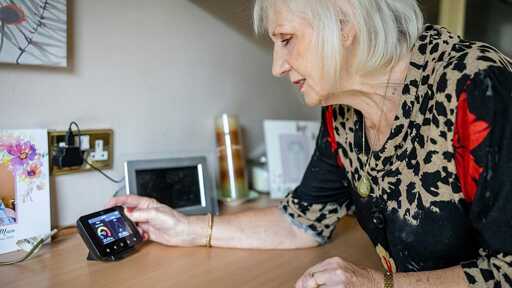
"Germany has one of the slowest smart meter rollouts in Europe. Just 5.5 per cent of households have one as of December 2025, compared with more than 90 per cent in France, Italy, the Netherlands and Spain, and 63 per cent on average EU-wide.
This makes it harder for Germany to shift energy use toward times when renewables are abundant, contributing to the country’s wasted wind and solar – and to Germans paying some of the highest energy bills in Europe. […]"
To be fair, even though I live in a country with that 90% adoption rate, it doesn’t benefit the consumer, especially if you have solar panels.
The only benefit is being able to track your own usage using the P1 port and anticipate on low hourly rates by using dynamic contracts and possibly home energy storage.
I thought a lot of the benefit was to the provider to use the data for balancing the grid.
You do not need to monitor individual households for that. Obtaining the data of how much power needs to be produced at what times was never an issue.
I’ve had a smart meter for 10 years. I’m highly motivated to cut energy use and I am very data minded. But still I’ve never bothered looking at useage data to alter behaviour. If this doesn’t feed into automating energy use (car charging, water heating, etc when energy is plentiful) then I’m certainly not going to sit around waiting to turn on the washing machine only when the energy meter says so.
Seems logical. However most modern washing machines and dishwashers have a delayed start feature or end time selection.
I’ve heard dynamic contracts used to be wide spread in Germany but I haven‘t seen one in the wild for as long as I live. I guess it makes sense smart meter adoption is slow when there‘s no real benefit.