There are some tank types that provide capabilities necessary or beneficial to non-aggressive military operations. Bridge laying tanks and recovery tanks ensure retreat options, engineering tanks enable forces to fortify positions, anti aircraft tanks should be self explanatory, mine removing tanks can not only clear enemy minefields but also your own after a war. Those are tanks that are necessary not only for offensive capabilities and many models of these types aren’t even armed.
IFVs offer protected mobility to infantry, howitzer tanks offer mobility and protection to artillery (and according to Ukraine, artillery is still quite important in their defensive efforts), etc.
Cheap drones may be or become the prime anti tank weapons on modern battlefields, but warfare has always been and will always be an arms race. Sooner or later, someone will find a counter to drones, tanks will be upgraded (and probably future tanks could be crewless, too, and be another drone type), and the wheel keeps spinning.
Pretty much anything armoured on tank chassis is armoured and built on tank chassis to give it the capability to operate alongside tanks while under fire. This is very well an extremely offensive capability. Especially with things like bridge layers, demining vehicles, and anti-aircraft systems, because they allow tanks (and other mechanised units) to advance into places otherwise not reachable or untenable for them.
On the other hand, tanks can also be used defensively, and some are built especially with defensive use in mind. The entire Leopard family for instance was designed specifically for the purpose of defensive (delaying) warfare against overwhelming tank forces (The Warsaw Pact had way more tanks than NATO during the entire Cold War) using “shoot and scoot” tactics, which is a big reason for their focus on very high mobility. (for example, they can go backwards as fast as forwards, and sacrifice quite a bit of armour for speed)
Cheap drones may be or become the prime anti tank weapons on modern battlefields, but warfare has always been and will always be an arms race. Sooner or later, someone will find a counter to drones, tanks will be upgraded (and probably future tanks could be crewless, too, and be another drone type), and the wheel keeps spinning.
Indeed. The tank has been declared dead for so often (pretty much every time someone invented a new anti-tank weapon) that it’s very likely to be a false alarm once again. There are many things that can take out a tank, including another tank. (With current technology it’s impossible to armour any practical vehicle in a way that gives complete immunity to a tank gun, common wisdom for tank on tank combat is whoever sees the opponent first and shoots first, wins the engagement, because one well placed shot will at least disable a tank) Pretty much any modern war is fought using a combined arms approach, tanks are just one part of this. Cheap mass produced Drones are a relatively new addition, and countermeasures are still evolving. Radio controlled drones can be jammed, and the wires of wire guided drones can be cut. In the end, especially the small drones typically used for anti-tank work can be shot down with something as simple as a shotgun, which is centuries old technology, fires cheap “dumb” ammunition, but has seen relatively limited use in warfare.
Do you think a tank is only a tank when it has a big gun?
If I understood the nomenclature used in English discussions, for them a tank indeed is an armoured tracked vehicle with a big gun, i.e. a MBT. In opposite, in German a Panzer is (almost) any heavy armoured ‘all terrain’ vehicle, e.g. also the PzH 2000, bridge layers (Bieber, Leguan), engineering vehicles (Dachs), Recovery vehicles (Büffel), IFVs (Marder, Puma) or the armoured multi purpose vehicles like Fuchs and Boxer.
I used the german Wikipedia page for types though.
Edit: the english Wiki page has a similar list, it’s just on a different page (german Wiki has a types list in the “Panzer”-article while the types I pointed out are referred to as Specialist tank in the article “Tanks Classification”).
Maybe the German definition is derived differently, but notice that in all the English links to military sources a careful distinction is made between “armored vehicles” and “tanks”.
The German definition is indeed different. That’s why the German Wikipedia article on “Panzer” (“armour”) links to “AFV” and not “Tank”.
This is a quite common misconception present in the media, as e.g. at the beginning of the Ukraine war the back-then German secretary of defense stated: “The Gepard is no tank. The Gepard is for protecting infrastructure by shooting with it’s pipe [Rohr] into the air.” which a) is a bogus quote and b) did not translate well, as she used “Panzer” to translate “tank” and not “(Haupt-)Kampfpanzer ((main) battle tank)”.
Tanks have often been modified for special purposes. The most common is armoured recovery vehicles, used during combat for recovery or repair of battle-damaged and inoperable armoured fighting vehicles. Another common use is to provide armoured capability for combat engineers. These include tanks carrying large-calibre demolition guns, with flails or ploughs for mine-clearing, or flame tanks armed with flamethrowers. The tank occasionally may lose its weapons and the chassis alone may be used, as in bridge-laying tanks
An army is not only tanks with big fat guns. All the mentioned assets lay the groundwork for any meaningful operation. What good are drones, if you cannot get a foothold and bring in forces to occupy landscapes?
None of these are tanks though. They are tracked vehicles with some armor plating (and even that isn’t necessarily the case for artillery or mobile air-defense). A tank as it is commonly understood has specific operational capabilities and those are are mostly denied by anti-tank drones.
If you adhere to the strict definition of “A tank is an armoured fighting vehicle intended as a primary offensive weapon in front-line ground combat.” you are right.
Still. While we see less tank on tank combat, we see a lot of tanks shooting at fixed positions. Same goes with IFVs as they unload troops or enable tactical advances.
They are far from being obsolete but they’re using smaller windows of opportunity. And sometime it takes a lot of anti tank drones before a tank had a mission kill.
They’re still valuable tactical assets.
Edit: found the image which explains the definition problem at reddit.


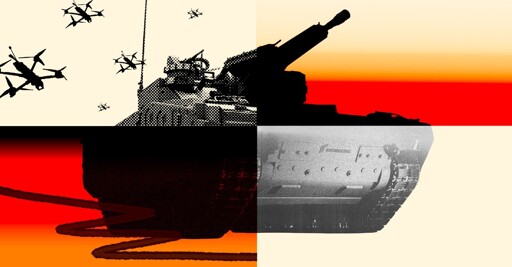
There are some tank types that provide capabilities necessary or beneficial to non-aggressive military operations. Bridge laying tanks and recovery tanks ensure retreat options, engineering tanks enable forces to fortify positions, anti aircraft tanks should be self explanatory, mine removing tanks can not only clear enemy minefields but also your own after a war. Those are tanks that are necessary not only for offensive capabilities and many models of these types aren’t even armed.
IFVs offer protected mobility to infantry, howitzer tanks offer mobility and protection to artillery (and according to Ukraine, artillery is still quite important in their defensive efforts), etc.
Cheap drones may be or become the prime anti tank weapons on modern battlefields, but warfare has always been and will always be an arms race. Sooner or later, someone will find a counter to drones, tanks will be upgraded (and probably future tanks could be crewless, too, and be another drone type), and the wheel keeps spinning.
Offensive and defensive isn’t that simple.
Pretty much anything armoured on tank chassis is armoured and built on tank chassis to give it the capability to operate alongside tanks while under fire. This is very well an extremely offensive capability. Especially with things like bridge layers, demining vehicles, and anti-aircraft systems, because they allow tanks (and other mechanised units) to advance into places otherwise not reachable or untenable for them.
On the other hand, tanks can also be used defensively, and some are built especially with defensive use in mind. The entire Leopard family for instance was designed specifically for the purpose of defensive (delaying) warfare against overwhelming tank forces (The Warsaw Pact had way more tanks than NATO during the entire Cold War) using “shoot and scoot” tactics, which is a big reason for their focus on very high mobility. (for example, they can go backwards as fast as forwards, and sacrifice quite a bit of armour for speed)
Indeed. The tank has been declared dead for so often (pretty much every time someone invented a new anti-tank weapon) that it’s very likely to be a false alarm once again. There are many things that can take out a tank, including another tank. (With current technology it’s impossible to armour any practical vehicle in a way that gives complete immunity to a tank gun, common wisdom for tank on tank combat is whoever sees the opponent first and shoots first, wins the engagement, because one well placed shot will at least disable a tank) Pretty much any modern war is fought using a combined arms approach, tanks are just one part of this. Cheap mass produced Drones are a relatively new addition, and countermeasures are still evolving. Radio controlled drones can be jammed, and the wires of wire guided drones can be cut. In the end, especially the small drones typically used for anti-tank work can be shot down with something as simple as a shotgun, which is centuries old technology, fires cheap “dumb” ammunition, but has seen relatively limited use in warfare.
Yes, the local construction site also has a lot of ”tanks" by that loose definition 🙄
Your local construction site has armoured vehicles capable of doing their jobs while under enemy fire? Why?
A caterpillar with some armor plating is now a tank?
Is this just “a caterpillar with some armour plating”? Or this one? What about this bridge-layer currently operated by Ukraine (among others)?
Do you think a tank is only a tank when it has a big gun?
If I understood the nomenclature used in English discussions, for them a tank indeed is an armoured tracked vehicle with a big gun, i.e. a MBT. In opposite, in German a Panzer is (almost) any heavy armoured ‘all terrain’ vehicle, e.g. also the PzH 2000, bridge layers (Bieber, Leguan), engineering vehicles (Dachs), Recovery vehicles (Büffel), IFVs (Marder, Puma) or the armoured multi purpose vehicles like Fuchs and Boxer.
I used the german Wikipedia page for types though.
Edit: the english Wiki page has a similar list, it’s just on a different page (german Wiki has a types list in the “Panzer”-article while the types I pointed out are referred to as Specialist tank in the article “Tanks Classification”).
Yes, because “tank” isn’t defined by armor plating or tracks, but by operational capabilities the weapon category offers.
https://de.wikipedia.org/wiki/Panzer#Typen
Maybe the German definition is derived differently, but notice that in all the English links to military sources a careful distinction is made between “armored vehicles” and “tanks”.
The German definition is indeed different. That’s why the German Wikipedia article on “Panzer” (“armour”) links to “AFV” and not “Tank”.
This is a quite common misconception present in the media, as e.g. at the beginning of the Ukraine war the back-then German secretary of defense stated: “The Gepard is no tank. The Gepard is for protecting infrastructure by shooting with it’s pipe [Rohr] into the air.” which a) is a bogus quote and b) did not translate well, as she used “Panzer” to translate “tank” and not “(Haupt-)Kampfpanzer ((main) battle tank)”.
https://en.wikipedia.org/wiki/Tank_classification#Specialist_tank
Difference is the above mentioned are armored.
An army is not only tanks with big fat guns. All the mentioned assets lay the groundwork for any meaningful operation. What good are drones, if you cannot get a foothold and bring in forces to occupy landscapes?
None of these are tanks though. They are tracked vehicles with some armor plating (and even that isn’t necessarily the case for artillery or mobile air-defense). A tank as it is commonly understood has specific operational capabilities and those are are mostly denied by anti-tank drones.
If you adhere to the strict definition of “A tank is an armoured fighting vehicle intended as a primary offensive weapon in front-line ground combat.” you are right.
Still. While we see less tank on tank combat, we see a lot of tanks shooting at fixed positions. Same goes with IFVs as they unload troops or enable tactical advances. They are far from being obsolete but they’re using smaller windows of opportunity. And sometime it takes a lot of anti tank drones before a tank had a mission kill. They’re still valuable tactical assets.
Edit: found the image which explains the definition problem at reddit.