

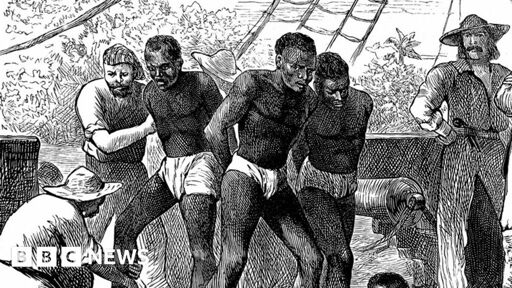
The United Nations General Assembly has voted to recognise the enslavement of Africans during the transatlantic slave trade as “the gravest crime against humanity”, a move advocates hope will pave the way for healing and justice.
The resolution - proposed by Ghana - called for this designation, while also urging UN member states to consider apologising for the slave trade and contributing to a reparations fund. It does not mention a specific amount of money.
The proposal was adopted with 123 votes in favour and three against - the United States, Israel and Argentina.
Countries like the UK have long rejected calls to pay reparations, saying today’s institutions cannot be held responsible for past wrongs.
This is true, but not all Slavery is equivalent. All of it is obviously awful, but in the ancient world, conquering your neighbors provided an easy way to acquire more land and agricultural labor to feed a growing population of citizens. Enslaved people were not enslaved forever, and it was more akin to indentured servitude than chattel slavery. Rather, enslaved people would eventually be free, and become citizens of Rome, for instance, with more or less the same rights as any other citizen.
Chattel slavery, on the other hand, was inedibly unique, as far as historic slavery is concerned. People were now being enslaved, for life, based on the color of their skin, shipped off across a continent, and their descendants were also slaves upon birth, and those descendants were bought and sold as commodities on an open market.
Chattel slavery required the invention of modern notions of race to be invented, in order to justify it, which has had ongoing social impacts that extend far beyond the relations of production which birthed it.